Amsterdam between known places and hidden gems
- The Editorial Office

- 28 mag 2023
- Tempo di lettura: 8 min
Are you looking for a complete itinerary through Amsterdam? Strolling through its beautiful canals and visiting the most classic places, but also discovering more secret places: read on to find out more.

Visiting Amsterdam means living an experience of other times: the canals of the Golden Age are the backdrop to wonderful museums, elegant fashion and design shops, a creative gastronomic panorama and a lively nightlife. Despite the hordes of tourists, this emblematic city manages to maintain a typically Dutch atmosphere: with the ancient crooked houses, cobbled streets, tree-lined canals and vast parks.
Between museums full of history such as the Rijksmuseum, the symbolic neighborhoods and walks among its greenery, seeing Amsterdam offers a whirlwind of emotions. Eating with a view of the canals or sitting limply in one of the city's restaurants is perhaps one of the most typical scenes you will see (and in which you will be the protagonists) in the city. A good tourist guide in Amsterdam also includes a tour of the center by bicycle, an experience not to be missed in the Netherlands and here in particular.
1. Museums, Art, Museumplein.
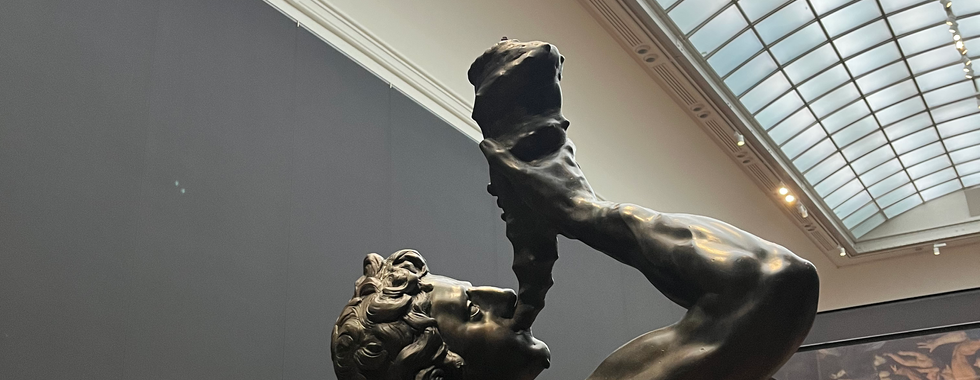
Amsterdam is also well known for its artistic and cultural wealh, thanks to the numerous museums, galleries, exhibitions and initiatives. Let's see the main museums (which are mostly located in the Museumplein area) and some art inspirations for your trip.
Rijksmuseum

The Rijksmuseum is a treasure trove of works of art and is the only museum with a cycle path. It was conceived to house several national collections, including that of the royal family, which occupy a 1. 5 km and 80 halls.
The museum is spread over four floors, from floor 0 (where the main atrium is located) to floor 3. The collection is truly vast. The main works can be seen in a couple of hours, but you will certainly decide to stay longer. Pick up a map at the information desk at the entrance. The galleries are well indicated: each room bears the number of the gallery and the theme. The first floor is divided into two parts by the atrium, each with its own entrance.
We advise you to start from the second floor as it houses the main works of the collection, including the masterpieces of the Golden Age, exhibited in the Gallery of Honor.
The queue at the entrance can be long, especially on Fridays, Saturdays and Sundays. The museum is less crowded before 10am and after 3pm. To save time, buy your ticket online: even if you have to queue to enter, once inside the museum you won't have to queuing at the ticket office. Museumkaart holders can also do this, but not those with the I Amsterdam Card (with this card you are entitled to a small discount, not free admission).
Van Gogh's Museum
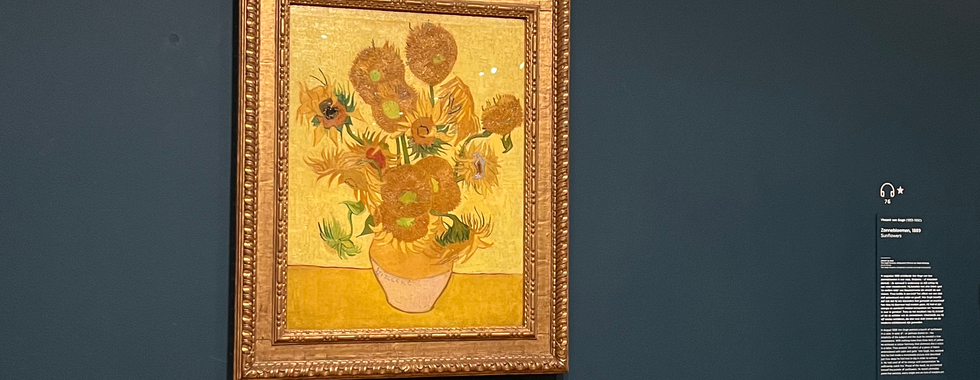
This magnificent museum houses the largest collection of Van Gogh's works in the world. Opened in 1973 to house the collection of Vincent's younger brother, Theo, it contains around 200 paintings and 500 drawings made by the master and some of his contemporaries, such as Gauguin and Monet.
In 2015, an elegant atrium was inaugurated at the entrance which added 800 m2 of space. The museum now extends over four floors in chronological order, from floor 0 (i.e. the ground floor) to floor 3. It is not an impossible feat to visit it all, it usually takes a couple of hours. It is extremely interesting to follow the painter's evolution from the first paintings, depicting gloomy Dutch peasants, to the French landscapes pulsating with life. The paintings are moved according to the theme of the current exhibition (e.g. 'naturalistic landscapes').
The queue at the entrance can be long, as access is limited to a certain number of visitors. Try to go after 3pm. I Amsterdam Card or Holland Pass holders enter for free, but still have to queue. E-ticket and Museumkaart holders wait the least, as they enter through the group entrance E-tickets are available online and at tourist information offices, at no extra cost. They can be exhibited in printed or digital form.
Other museums
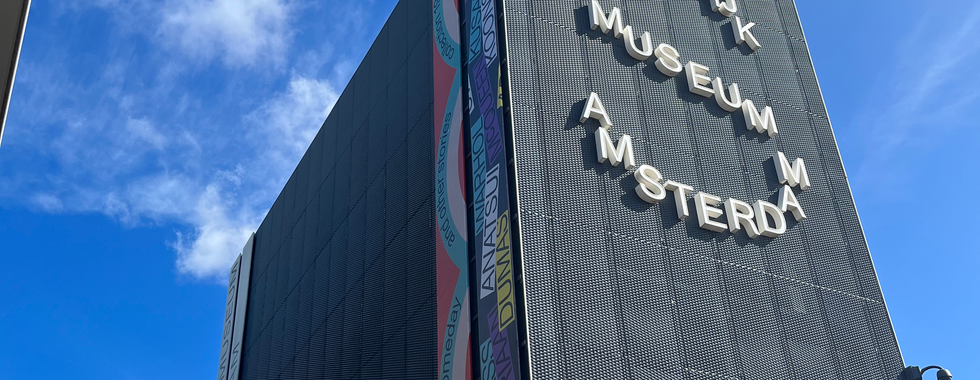
Moco, Stedelijk, Foam Museum, Nxt Museum, Tulips Museum, Fabrique Des Lumières.
In Amsterdam you can also find lots of very interesting art galleries: if you are passionate about that, we certainly recommend a walk through Jordaan District.






2. Relaxing surrounded by nature or walking open-air
Vondelpark
The favorite park of the inhabitants of Amsterdam is the Vondelpark: 47 hectares of meadows, ponds and winding paths frequented by 12 million people a year. Here the life of the capital is concentrated: tourists, skaters, young mothers with children, not to mention the endless parade of bicycles. On sunny days it is difficult to move around due to the large number of people having a picnic.
But that wasn't always the case. The Vondelpark was once a private park reserved for the wealthy. Its English-style expanse of lawns, ponds, footbridges and paths was built on marshland by the architect Jan David Zocher and inaugurated in 1865. Between 1875 and 1877 Zocher's son, Louis Paul Zocher, enlarged it to current size.
Originally called Nieuwe Park (New Park), a statue of the poet and playwright Joost van den Vondel (1587-1679), created by the sculptor Louis Royer, was placed there in 1867. People in Amsterdam began referring to the park as Vondelspark (Vondelpark), and the name has stuck ever since. The rose garden, which boasts 70 species of roses, was added in 1936. The Vondelpark was purchased by the city in 1953 and opened to the public.
About a century after its opening, the park, located above a swamp, had sunk two or three meters. Declared a national monument in the mid-1990s, it underwent major restoration works, which provided it with a water drainage system and new pedestrian and cycle paths, without altering its appearance.
Near the eastern edges, the 19th-century Italian Renaissance-style Vondelparkpaviljoen is now a café-bar, the Vondelpark3. There are also other clubs, playgrounds and a magnificent open-air theater, the Openluchttheater.
The park houses 69 sculptures, including Picasso's Figure découpée l'Oiseau, better known as The Fish (1965), which the artist donated to the park on the occasion of the centenary on condition that it would never be moved.
Open-air markets
No visit to Amsterdam is complete without a tour of its bustling open-air markets. Check the dates for the Sunday Market, with food and craft stalls in various parts of the city, and the IJ Hallen flea market, in Amsterdam Noord.
Amsterdammers love markets, from those selling silk scraps and coins to those dealing in organic cheeses and bicycle locks. The undisputed king is the Albert Cuypmarkt in De Pijp, where the stalls sell rice cookers, spices and typical snacks, such as the sweet stroopwafels (flaky waffles filled with syrup). For flowers go to the Bloemenmarkt, for porcelain teapots and bric-à-brac of various kinds to the Waterlooplein flea market, for books to the historic Oudemanhuis market.
To visit: Albert Cuyp, Bloemenmarkt, Waterlooplein, Antiques Market, Noordermarkt, Niewmarkt, Dappermarkt.
Hortus Botanicus
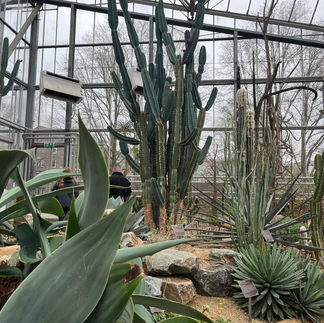
The botanic garden was founded in 1638 as a medicinal herb garden for the city's doctors and was moved to the Plantage in 1682, where it became a display of tropical plants and seeds brought to Amsterdam by ships of the East and West India Companies. From here coffee, pineapple, cinnamon and palm oil spread all over the world.




3. Cities near Amsterdam
Rotterdam

Rotterdam is the second most populous city in the country and a major commercial centre, home to one of the busiest ports in the world. This city is a destination that is rarely included in the tourist itineraries to discover the Netherlands, even if it is a lively destination with plenty of activities to do.
Rotterdam, in fact, is not famous for its historical heritage since most of the ancient sites were destroyed due to the German bombings, which took place during the Second World War, but more for its modern and avant-garde aspect.
The development of the city began in the 19th century, thanks to the impetus of the Industrial Revolution and the expansion of Germany. A large influx of workers arrived here during those years and Rotterdam's growth didn't stop until the Second World War, when the Luftwaffe bombed it several times leaving it half-destroyed. From the damage caused by the war, however, the municipality carried forward the idea not so much of rebuilding what had been lost, but of creating a "new" and better Rotterdam. From 1950 to 1970 the city was practically completely rebuilt. Indeed, today the city is known for being a place with buildings and works built by famous architects in recent times and for being the ideal destination for those who love architecture and shopping thanks to the presence of numerous boutiques of major brands.
Haarlem

Just 30 km from Amsterdam lies the small but charming town of Haarlem which is the perfect destination for a day trip from the Dutch capital. Haarlem is considered by many to be a "little Amsterdam" as it is characterized by a cozy but welcoming historic center, several museums of great interest and a beautiful waterfront.
The history of Haarlem seems to begin around the tenth century when this territory was a small settlement built along a road that connected the north with the south of the country. Over time this locality has grown to become the residence of the Counts of Holland and one of the most important cities; between the 16th and 17th centuries Haarlem welcomed many Flemings who were experts in the linen and silk trade and the city developed and enriched especially in the years of the so-called "Golden Age". Less chaotic than the capital, Haarlem is now a destination that wins you over with its peaceful atmosphere, historic sites and truly unique charm. Furthermore, the city is located in the center of a region famous for the cultivation of flowers, especially tulips.
Haarlem is a truly unique city that boasts a historic center characterized by canals, bridges, small cobbled streets, elegant gardens and historic buildings. The heart of city life is undoubtedly the Grote Markt (Main Square) where festivals, concerts and markets are often organised. Alongside the more historic Harleem, however, there is also a more modern area of the city with trendy shops and luxurious restaurants.
Utrecht
Utrecht is a lively city in the Netherlands known for its ancient origins and glorious past as an important trading location. The birth of the city seems to date back to 45 AD. when the emperor Claudius ordered the construction of a belt of camps and trading posts along the river Rhine which at the time marked the northernmost border (limes) of the Roman Empire. A Roman fort (or castrum) had been built in this area which was first called Traiectum (or "crossroads") and then Ultraiectum from which the toponym Utrecht later derived. In the following centuries the encampment expanded and thus a settlement was born which over time became the city of Utrecht.
Remains of the Roman period have been found in the center of Utrecht which preserves a well-kept and orderly historic core with many testimonies of its past. In particular, there are many elegant and finely decorated buildings built between the 16th and 17th centuries, when the Netherlands was a great colonial power. Now Utrecht is one of the most populated city in the Netherlands and is known for its University (Universiteit Utrecht) which was founded in 1636 and is considered to be not only one of the oldest in the nation but also one of the largest in Europe.
The presence of the University has marked and strongly marks the life of Utrecht which boasts a mainly young population and the presence of many foreign students and researchers. From the point of view of cultural activities, the city boasts a dynamic and very active centre, especially due to the presence of various museums, theaters and art galleries. Utrecht, however, is also known for its modern soul that can be breathed in the Science Park, a center that houses over 130 multinationals, two universities and several research institutes.
4. Some nice places to eat or brunch
Lotti’s / Hoxton hotel
Pllek
Pluk
De hallen / Foodhallen
Bakers & Roasters
MOAK Pancakes
The Pancake Club
Bagels & Beans
5. Other places to see and interesting things to do

Dam Square
Red lights district
9 Streets
Jordaan District
Do a canal cruise
Visit Amsterdam Noord
Walk through the parks
Rent a bicycle
Visit Amsterdam during King's day
Visit the markets
6. Some of the typical dishes to eat

Dutch Fries (best place: Fabel Friet)
Pannenkoeken (pancakes)
Stroopwafels
Biscuits (best place: Het Koekemannetje)
Poffertjes
Kaas (dutch cheese)
Jenever
Oliebollen
Bitterballen
We hope you found this article useful for your next visit to Amsterdam! If you have other doubts or need more tips follow us on Instagram (@wordsoftravel) or write in the comments.
Have a nice visit!
© The Editorial Team, 2023.


Commenti